Driving to Canada With a Michigan Enhanced Driver’s License
Driving to Canada can raise a practical question: will your Michigan Enhanced Driver’s License cover the trip, and what does it actually prove at the border? The key is to separate U.S. re-entry from Canadian entry. This guide explains the card’s stated use, what to verify before leaving, and how to avoid treating it as a passport for every kind of travel.
What a Michigan Enhanced Driver’s License Does for a Canada Trip
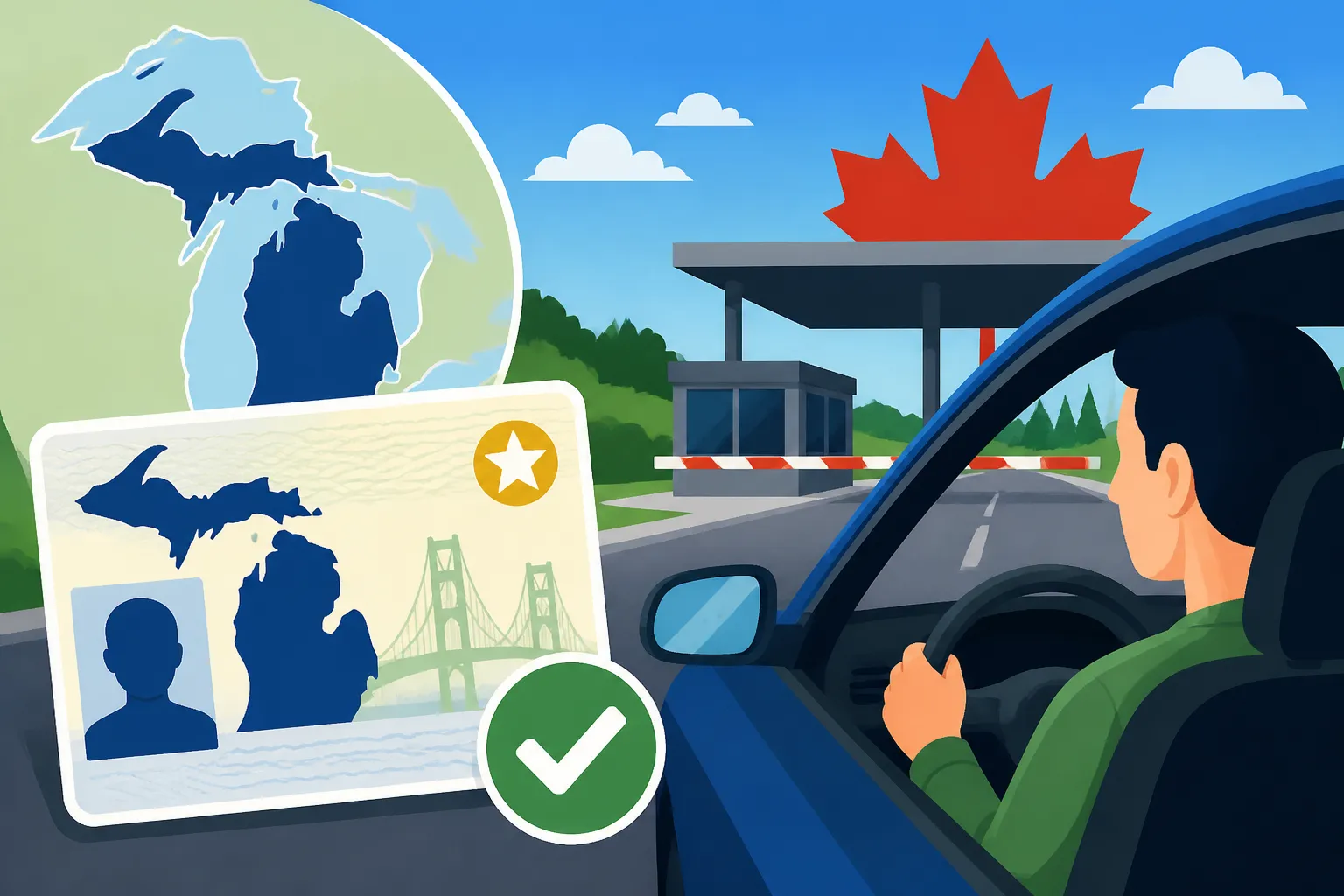
According to the Michigan Department of State, a Michigan Enhanced Driver’s License can be used to re-enter the United States from Canada by land or sea. That makes it a potentially useful credential for a road trip across the border and for a return journey by sea.
The important detail is the direction of travel covered by that statement: re-entry to the United States. It does not, by itself, answer every question about whether you can enter Canada, which documents Canadian authorities may require, or whether the same card works for a different route or mode of travel.
For a drive to Canada and back, think of the trip as two separate border decisions:
- Entering Canada: Confirm that you meet Canada’s current entry requirements and that your documents are acceptable for your specific circumstances.
- Returning to the United States: The Michigan Department of State says the Michigan Enhanced Driver’s License can be used for re-entry from Canada by land or sea.
That distinction is useful even if your trip is straightforward. Travelers often focus on the return crossing because the Michigan credential is issued by a U.S. state. But permission to re-enter the United States and permission to enter Canada are not interchangeable questions. Check both sides before departure rather than assuming that a document accepted on one side automatically resolves the other.
An Enhanced Driver’s License is still a driver’s license, but its enhanced designation relates to its travel use. It is not a blanket substitute for a passport for every trip. If your plans include flying internationally, crossing by a route other than land or sea, or continuing to another country, do not assume the Michigan card is enough. Verify the document rules for the full itinerary.
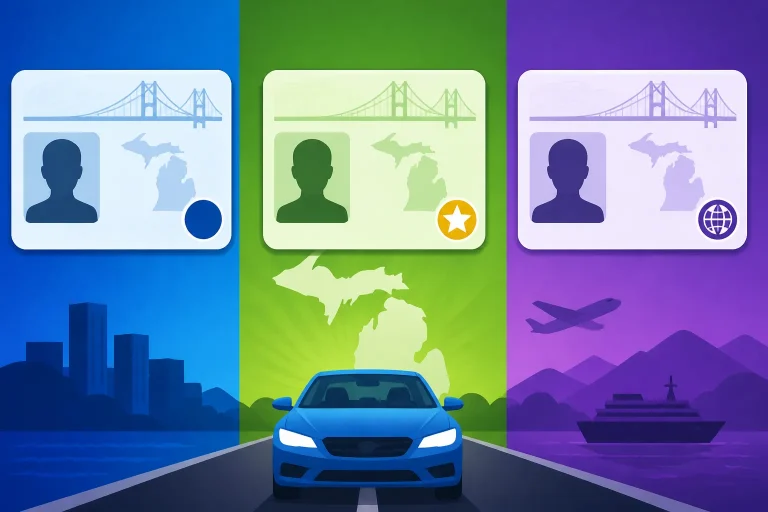
For a broader comparison of credential types, see Michigan REAL ID vs Enhanced Driver’s License: What Sets Them Apart. If you are weighing a standard license, REAL ID, and an enhanced credential together, Michigan Standard vs REAL ID vs Enhanced Licenses Compared can help clarify what each is designed to do. The practical choice depends on your travel needs, not just the name printed on the card.
What the Enhanced License Does Not Automatically Settle
A common mistake is to treat “usable for border travel” as a complete answer. The Michigan Department of State’s statement is specific: the card can be used to re-enter the United States from Canada by land or sea. Several other questions still need their own answers.
It does not establish every Canadian entry requirement
The U.S. re-entry rule does not tell you whether Canada will admit you, what documents Canadian authorities expect, or whether your personal situation affects the requirements. Check current Canadian entry guidance before you leave. This matters particularly if your citizenship, immigration status, travel purpose, or accompanying passengers make your situation different from a simple personal road trip.
Do not rely only on a friend’s recent crossing, an old travel checklist, or a general statement that an enhanced card is accepted “at the border.” Requirements can depend on the traveler and the trip. Confirm the rule that applies to you, and make sure the document you plan to present is the one accepted for your route and circumstances.
It is not a passport for every kind of travel
The Michigan Department of State says the Michigan Enhanced Driver’s License is not a passport for every type of travel. That caution should guide your planning. A card that serves for U.S. re-entry by land or sea should not be assumed to meet a different requirement for air travel or another itinerary.
If your return plan might change, consider what happens if you need to fly home, travel through another country, or use a route that is not land or sea. Check the applicable document rules before relying on the enhanced license as your only travel credential.
It does not answer questions about vehicle paperwork
The card’s border use is separate from the documents and arrangements connected to the vehicle. If you are driving a borrowed, leased, rented, financed, or company vehicle, check with the owner or provider about permission to take it across the border and any paperwork they expect you to carry. The card’s stated travel use does not resolve those separate matters.
Similarly, confirm that your vehicle insurance arrangements apply to the trip and understand how to contact your insurer if something happens. Do not assume that the license itself proves vehicle ownership, establishes permission to use someone else’s vehicle, or settles insurance coverage.
It does not replace ordinary driving readiness
Border-document acceptance is not a substitute for preparing the vehicle and driver for travel. Make sure your license is valid for driving, your vehicle is in appropriate condition, and you have a plan for navigation, roadside help, and unexpected delays. Those are practical preparations, not extra permissions granted by the enhanced card.
A useful way to keep the scope straight is to use a simple comparison:
| Question | What the Michigan Enhanced Driver’s License settles | What you should verify separately |
|---|---|---|
| Can the card be used to re-enter the United States from Canada by land or sea? | Yes, according to the Michigan Department of State. | Keep the credential available for the return crossing. |
| Can I enter Canada with it? | The U.S. re-entry statement does not settle this. | Confirm current Canadian entry requirements for your circumstances. |
| Can I use it for every kind of international travel? | No. The Michigan Department of State says it is not a passport for every type of travel. | Check requirements for the route and mode of travel. |
| Can I take any vehicle across the border? | The credential does not settle vehicle permission or paperwork. | Confirm with the owner, rental provider, or other relevant party. |
| Does it guarantee a quick crossing? | No guarantee of processing time is established by the credential. | Allow flexibility and follow officials’ instructions at the crossing. |
This separation prevents a narrow fact from being stretched into a broader promise. The card has a clearly stated use for U.S. re-entry by land or sea; other parts of the trip still require their own checks.
Check Your Documents and Trip Before You Leave
The most reliable preparation is to confirm that each traveler has the right documents for the trip they are actually taking. Start with your own Michigan Enhanced Driver’s License, then check the Canadian entry requirements that apply to you and any passengers. If a passenger is relying on a different credential, verify that credential separately rather than assuming the driver’s document covers everyone in the vehicle.
Use this process before departure:
- Confirm the route and travel mode. Identify how you plan to enter Canada and how you expect to return to the United States. The Michigan Department of State’s stated use for the enhanced license concerns U.S. re-entry from Canada by land or sea.
- Check Canadian entry requirements. Consult current official Canadian guidance for each traveler. Do not use the U.S. re-entry rule as a substitute for this check.
- Review the credential you will carry. Make sure you know which card you intend to present and that it is physically available for the trip. If you are not sure whether your license is enhanced, compare its credential type with the information in Documents Required for a Michigan Enhanced Driver’s License.
- Check vehicle permission and paperwork. If you will not be driving a vehicle registered to you, ask the owner or provider what authorization or documents are appropriate for crossing. Do this before the day of travel, when a missing document is harder to resolve.
- Check insurance and emergency arrangements. Ask your insurer or the vehicle provider about coverage for the planned trip. Keep relevant policy details and assistance contacts accessible.
- Make a backup plan for a changed itinerary. If the return route changes or travel by air becomes necessary, verify the document rules for that new plan before you depend on the enhanced license alone.
A document check is especially important when the trip has more than one leg. For example, a traveler might drive into Canada, take a ferry, and then return by a different route. The U.S. re-entry statement covers land or sea, but the precise document requirement still needs to match the actual crossing. Verify each leg, not just the first border crossing.
If you are applying for an enhanced license specifically for a trip, do not assume that beginning an application means you can travel with the intended credential. Confirm that you have the issued card in hand and that it is the correct type before leaving. For process context, see Applying for an Enhanced License at Michigan Secretary of State. If the card has not arrived, Waiting on Your Michigan Enhanced License: Typical Delivery Times may help you understand what to check next, but confirm your travel decision through the official Michigan Department of State.
Check passengers as well as the driver
The driver’s enhanced license does not establish what every passenger needs. Each person should confirm their own travel documents and eligibility. This is particularly important when a group includes travelers with different citizenship or immigration circumstances, children, or people who are not close relatives of the driver. Do not make assumptions based on the driver’s credential or on what another passenger used on a previous trip.
If someone in the group has a different document, confirm that it is accepted for both the Canadian entry and the U.S. return portions of the trip. If the answer is uncertain, resolve it before departure rather than discovering the issue at the border.
Keep the plan consistent with the document
Your travel plan and the credential you rely on should match. If you intend to return by land or sea, the Michigan Department of State’s stated re-entry use is relevant. If you may need to return by air or take a different route, check the requirements for that possibility instead of assuming the card will cover it.
A flexible itinerary is useful, but flexibility should not mean ignoring document requirements. If plans change, pause and confirm the new route’s rules before proceeding.
Prepare the Driver, Vehicle, and Crossing
Even when your documents appear to be in order, a little organization makes the crossing easier to manage. Keep your Enhanced Driver’s License where you can reach it without digging through luggage. Keep other travel and vehicle documents together, but separate enough that you can present the requested item without handing over an unrelated stack of papers.
Before departure, consider these practical checks:
- Confirm that the vehicle owner has approved the trip if you are borrowing or using a vehicle that is not yours.
- Ask a rental or leasing provider about cross-border permission and any required documentation before making the reservation or leaving.
- Verify the insurance arrangements with the insurer or provider instead of assuming coverage from the fact that the vehicle is insured at home.
- Keep the address and contact information for the vehicle owner, rental provider, or insurer accessible.
- Plan for a possible delay and avoid building a time-critical appointment around an assumed crossing time.
- Make sure passengers know where their own travel documents are and can present them if asked.
- Review your route and identify a backup plan if a crossing is delayed or your travel arrangements change.
These steps are sensible trip preparation, not a claim that every traveler must carry a particular form or that every vehicle will be treated the same way. Requirements can depend on the vehicle arrangement and the people traveling. Ask the relevant owner, provider, or insurer when the answer affects your plans.
Keep documents accessible, not just packed
A credential packed in a suitcase may technically be with you, but it is inconvenient when you need to present it. Keep the Enhanced Driver’s License secure and accessible. Avoid placing it somewhere that requires unloading the vehicle or moving other passengers’ belongings at the crossing.
Take care with photos or digital copies. They may be useful as backup records, but do not assume a photo can replace the physical credential when an official asks to see the card. Follow the document requirements for the crossing and keep the original credential protected.
Don’t treat a past crossing as a guarantee
A previous successful trip can be reassuring, but it does not establish that the same documents will be accepted for every traveler, route, or future plan. Your circumstances may have changed, the trip may involve a different vehicle, or you may be returning by another mode. Recheck the requirements that fit the current trip.
For a focused overview of the land-border issue, see Land Border Travel: Using Your Michigan Enhanced License for Canada. A related discussion is Crossing Land Borders Using a Michigan Enhanced Driver’s License. Use these as planning context, then verify the current official requirements for your own crossing.
At the Border and on the Return Trip
At the border, be ready to present the travel document requested by officials and to answer questions about your trip. Keep your explanation clear and consistent with your plans. If asked to provide additional information, follow the instructions given by the border officials.
Do not assume that having an Enhanced Driver’s License means you can skip inspection, questioning, or other border procedures. The Michigan Department of State’s statement concerns the card’s use for U.S. re-entry from Canada by land or sea; it is not a promise of immediate passage or a guarantee that no other questions will be asked.
The return trip is where the scope of the Michigan credential is most directly relevant. According to the Michigan Department of State, a Michigan Enhanced Driver’s License can be used to re-enter the United States from Canada by land or sea. Keep the card available for that crossing. If you have also been told to carry other documents for your circumstances, keep those accessible as well.
If your return plan changes, do not rely on the land-or-sea statement to answer a different travel question. For example, a change to an air itinerary is a reason to check the document requirements for that route. Likewise, if you plan to cross somewhere other than the route you originally researched, confirm what applies before you travel.
If the officer asks for another document
Answer honestly and follow the instructions you are given. If you do not have a requested document, do not guess about whether the Enhanced Driver’s License can substitute for it. Explain what you have and ask what the next step is. The card’s stated role does not mean every other document request is unnecessary.
If an unexpected issue arises, stay calm and avoid relying on secondhand advice from other travelers in line. Officials at the crossing can explain the process for your situation. Keep any notes about vehicle permission, travel arrangements, or insurance available if they are relevant to the question being asked.
If a document is lost or unavailable
If your Enhanced Driver’s License is lost, damaged, or not in your possession before the trip, do not assume that a temporary paper document, a photo, or another Michigan credential provides the same border use. Confirm directly with the Michigan Department of State and the appropriate border authorities before travel. If you are already away from home, also check what replacement or assistance options are available through the official agency.
This is one reason to avoid making a last-minute credential change without checking its effect on travel. A regular driving credential may still have a role for driving, but do not infer that it has the same stated travel function as an Enhanced Driver’s License. For help distinguishing credentials, see Choosing Between a Michigan REAL ID and an Enhanced Driver’s License.
Choosing a Credential and Handling a Changed Plan
Whether an Enhanced Driver’s License is the right credential depends on how you travel. If Canada trips by land or sea are part of your plans, its stated U.S. re-entry use may be useful. If you rarely travel across a border, or if your main concern is a different kind of travel, compare the requirements for that specific trip before deciding that an enhanced card is necessary.
A simple decision framework can help:
| Your travel situation | Practical next step |
|---|---|
| You expect to drive to Canada and return by land | Confirm Canadian entry requirements and keep the Michigan Enhanced Driver’s License available for U.S. re-entry. |
| You expect to return from Canada by sea | The Michigan Department of State says the credential can be used for U.S. re-entry by sea; confirm any other requirements for the itinerary. |
| You might fly home or change to another travel mode | Check the document rules for the revised route; do not treat the card as a passport for every type of travel. |
| You are comparing license options | Compare the travel purposes and requirements of standard, REAL ID, and enhanced credentials before choosing. |
| You have not received the enhanced card | Do not assume an application receipt or another credential provides the same travel use; confirm your options with the official agency. |
An Enhanced Driver’s License should be selected for a reason, not just because it sounds more comprehensive. Its stated border use does not mean it replaces every identity or travel document in every circumstance. If your needs are mainly related to driving within Michigan or domestic identification, compare the relevant credential features rather than assuming the enhanced designation is automatically the best fit.
The same caution applies if you already hold a REAL ID or standard license. They are distinct credential types, and you should not treat them as interchangeable for an international border trip. The right question is not simply “Which one is better?” It is “Which document meets the requirements of the travel I actually plan to take?” The comparison in Michigan REAL ID vs Enhanced Driver’s License: What Sets Them Apart can help frame that decision.
If you are planning around a pending card
If you have applied for an Enhanced Driver’s License but do not have the card yet, verify what credential you currently possess and whether it meets the requirements for your trip. Do not make plans on the assumption that the new card will arrive by a particular date or that a temporary document has identical travel use. For delivery-related questions, see How Long Does the Michigan SOS Take to Mail an Enhanced License? and confirm current status or options with the Michigan Department of State.
If the trip is important and the card is delayed, consider changing the travel date or verifying an alternative document route. A travel plan that depends on an unconfirmed credential is a avoidable risk, especially when the itinerary has no easy way to change after departure.
If you are traveling with a group
Assign one person to check that all travelers have the documents applicable to them, but have each traveler keep their own credentials accessible. A single driver’s Enhanced Driver’s License does not automatically resolve another person’s entry or return requirements. Confirm each traveler’s situation separately, especially if the group includes people whose travel status or citizenship differs.
If one passenger’s documents are uncertain, address that before the vehicle reaches the crossing. A group may need to adjust its plans if one traveler does not meet the applicable requirements, and that possibility is easier to handle before travel begins.
Common Misunderstandings to Avoid
“If it works to come back to the United States, it must automatically be enough to enter Canada.”
That conclusion does not follow from the Michigan Department of State’s statement. The statement concerns U.S. re-entry. Check Canadian entry requirements separately.
“An Enhanced Driver’s License is the same as a passport.”
It is not a passport for every type of travel. The Michigan Department of State specifically cautions that its use is not universal. Check the document rules for the mode and route you plan to use.
“The card means the crossing will be quick.”
The credential’s stated use does not promise a particular wait or guarantee that officials will not ask questions. Allow flexibility and follow the instructions at the crossing.
“The driver’s card covers everyone in the vehicle.”
Each traveler should verify their own documents and requirements. Do not assume another person can rely on the driver’s credential.
“The license settles questions about the car.”
It does not establish permission to take a borrowed or rented vehicle across a border, or confirm insurance coverage. Check with the vehicle owner or provider and your insurer.
“A photo or temporary paper document must work the same way.”
Do not assume that. Confirm the specific document’s use with the official agency and the relevant border authorities before relying on it for travel.
The safest approach is to keep the claims narrow: the Michigan Enhanced Driver’s License can be used for U.S. re-entry from Canada by land or sea, according to the Michigan Department of State. Use that fact as one part of your planning, then verify the rest of the trip independently.
Frequently Asked Questions
Can I drive to Canada with a Michigan Enhanced Driver’s License?
The Michigan Department of State says the card can be used to re-enter the United States from Canada by land or sea. Confirm current Canadian entry requirements for your circumstances before departure.
Does the Michigan Enhanced Driver’s License replace a passport for every trip?
No. The Michigan Department of State says it is not a passport for every type of travel. Check the document rules for your route and mode of travel, especially if plans involve air travel or a changed itinerary.
Does the card guarantee that I can enter Canada?
The U.S. re-entry statement does not establish Canadian entry eligibility. Check current official Canadian guidance for each traveler and the specific trip.
What if I am driving a borrowed or rented vehicle?
Ask the owner or rental provider about cross-border permission and any paperwork they require. Separately confirm insurance arrangements with the insurer or provider; the driver’s license does not settle those vehicle questions.
Disclaimer
This article is for general informational purposes only and does not constitute professional advice. Laws, prices and regulations vary by location and change over time. Consult a qualified professional for guidance on your specific situation. Michigan Driver Guide is not a government agency and is not affiliated with any state motor vehicle department.