Michigan REAL ID vs Enhanced Driver’s License: What Sets Them Apart
A Michigan REAL ID and an Enhanced Driver’s License can both seem like upgraded versions of a driver’s license, but they solve different travel problems. The key distinction is whether you need identification for domestic air travel and certain federal facilities, or a credential that also supports re-entry to the United States at qualifying land and sea borders. Here’s how to choose without assuming one replaces every other document.
The main difference in plain language
According to the Michigan Department of State, a Michigan REAL ID is for domestic air travel and certain federal facilities, but it does not qualify for land or sea re-entry to the U.S.; you’ll need a passport or another federally accepted border document.
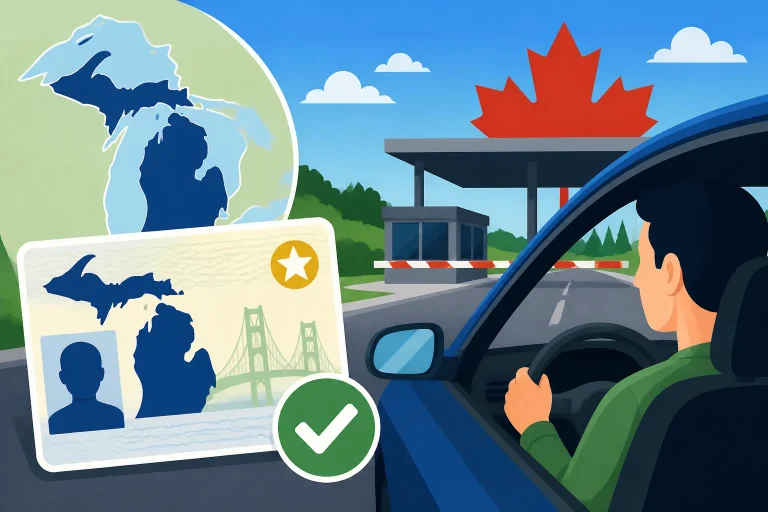
According to the Michigan Department of State, an Enhanced Driver’s License works for that re-entry from Canada, Mexico, Bermuda, or the Caribbean and serves as proof of identity and citizenship, so no additional proof is needed at the border.
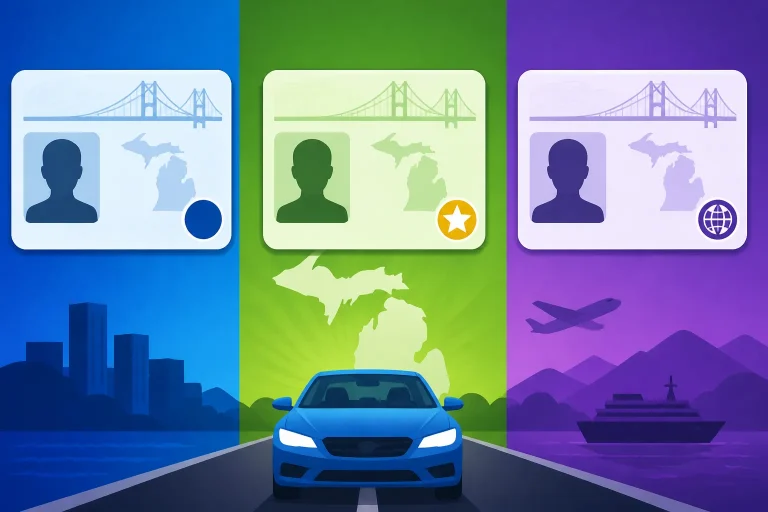
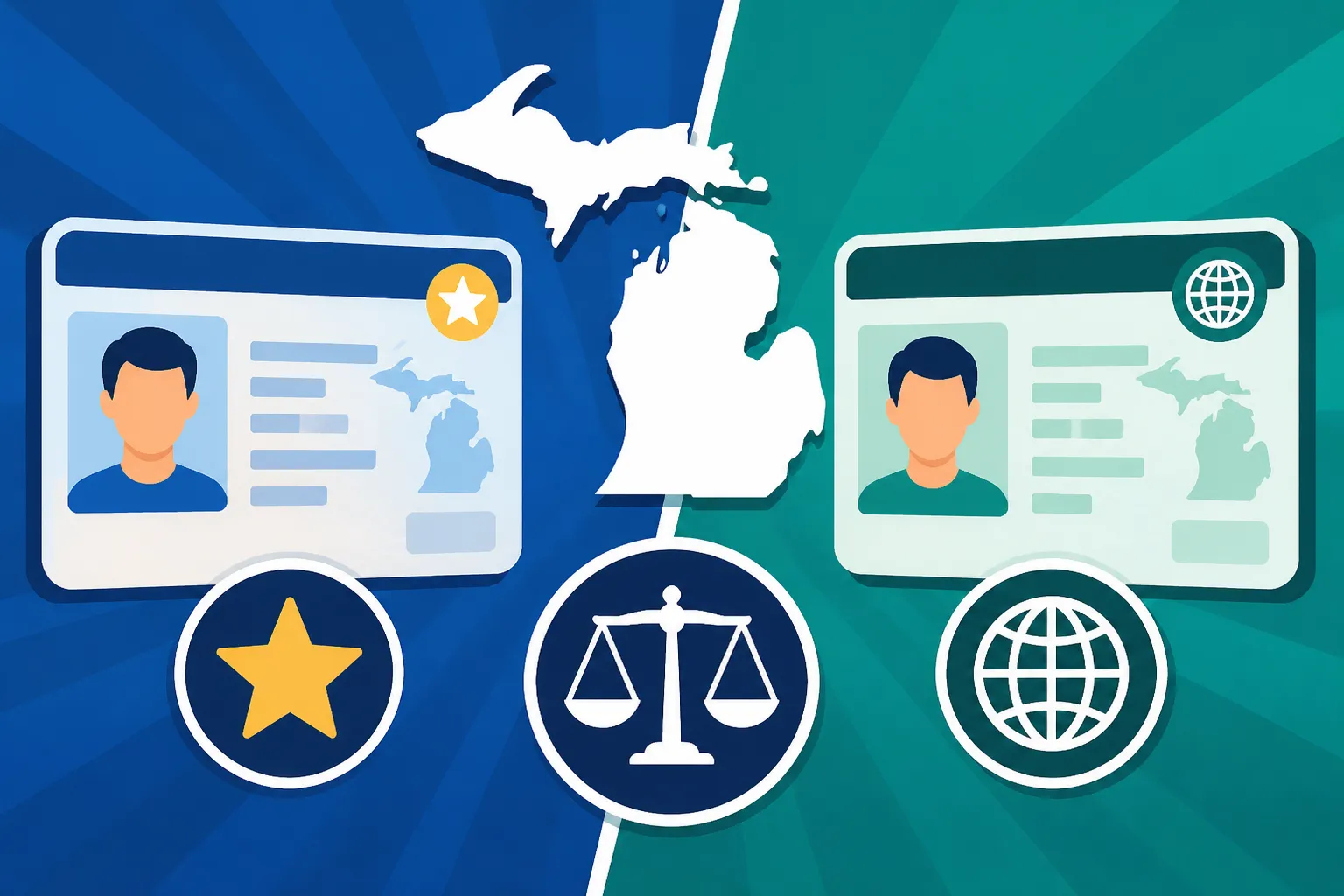
That difference is the practical starting point. A REAL ID addresses specific federal identification purposes within the United States. An Enhanced Driver’s License, often called an EDL, adds a stated use for re-entry to the United States from certain nearby countries and regions by land or sea.
The credentials are not interchangeable for every situation. If your question is simply whether a Michigan REAL ID lets you cross the border and return without a passport or another accepted border document, the answer is no. If you want a credential for the stated land or sea re-entry purpose, the EDL is the Michigan credential described for that use.
That does not mean an EDL automatically solves every travel-document question. Your route, destination, mode of travel, and the documents required for the whole trip still matter. The Michigan Department of State’s description identifies particular places and land or sea re-entry; it should not be stretched into a promise about other destinations, travel modes, or requirements imposed by another country.
A useful way to think about the choice:
- Choose based on the trip or federal-facility purpose you actually need to cover.
- Do not treat a REAL ID as a border-crossing document.
- Do not assume an EDL covers travel situations that are not described by the Michigan Department of State.
- Keep a passport or other federally accepted border document in your plan when the REAL ID is your chosen credential for domestic use.
- Confirm current requirements with the official agency before making travel plans.
For a broader side-by-side overview, see Michigan Standard vs REAL ID vs Enhanced Licenses Compared and Choosing Between a Michigan REAL ID and an Enhanced Driver’s License.
What each credential is meant to cover
The most useful comparison is not which card sounds more advanced. It is what problem each credential is described as addressing, and what it does not replace.
| Travel or identification need | Michigan REAL ID | Michigan Enhanced Driver’s License |
|---|---|---|
| Domestic air travel | The Michigan Department of State says a REAL ID is for domestic air travel. | The stated EDL fact in this comparison is its land or sea re-entry use; confirm any other intended use with the Michigan Department of State. |
| Certain federal facilities | The Michigan Department of State says a REAL ID is for certain federal facilities. | The stated EDL fact in this comparison is its land or sea re-entry use; confirm any other intended use with the Michigan Department of State. |
| Re-entry to the United States by land or sea from Canada, Mexico, Bermuda, or the Caribbean | A REAL ID does not qualify for this purpose. You’ll need a passport or another federally accepted border document. | The Michigan Department of State says an EDL works for that re-entry and serves as proof of identity and citizenship. |
| Additional proof at the border for the stated EDL use | A REAL ID alone is not enough for land or sea re-entry. | The Michigan Department of State says no additional proof is needed at the border for the stated EDL use. |
| Any other trip or travel mode | Do not assume the credential answers requirements beyond its stated purpose. Check the official requirements for the trip. | Do not assume the credential answers requirements beyond its stated purpose. Check the official requirements for the trip. |
The table is intentionally narrow. It separates what the Michigan Department of State says about each credential from questions that need an additional, trip-specific answer. For instance, the REAL ID’s stated uses do not turn it into a border document. Likewise, the stated border use for an EDL does not establish that it covers every international itinerary.
This distinction matters when someone says, “I have an enhanced license, so I’m covered,” or “I have REAL ID, so I can cross.” Those statements can conceal the exact question: covered for which part of the trip? A credential may fit one part of a journey but not another.
A REAL ID holder planning to return to the United States by land or sea from one of the listed places needs a separate border document: a passport or another federally accepted border document. A traveler with an EDL should still check the requirements for the complete itinerary, rather than assuming the card applies to every border, route, or mode of travel.
If you are comparing all three Michigan credential types, including a standard license, Michigan Standard vs REAL ID vs Enhanced Licenses Compared can help keep the categories separate. For the specific question of whether a standard license meets REAL ID purposes, see Is a Standard Michigan Driver’s License Valid for REAL ID?.
When a Michigan REAL ID may fit your plans
A Michigan REAL ID may be the relevant choice if your main concern is identification for domestic air travel or access to certain federal facilities. Those are the uses the Michigan Department of State identifies for the credential. If those are your needs and you do not require the stated EDL border-re-entry function, compare the REAL ID option with your actual travel plans before selecting a credential.
Be precise about what “domestic travel” means in your plans. The stated REAL ID use is domestic air travel. It does not, by itself, answer questions about returning to the United States from another country. In particular, it does not qualify for land or sea re-entry. A traveler can use a REAL ID for the stated domestic purpose and still need a separate accepted document for a later border crossing.
That can happen on a trip with more than one leg. Imagine flying within the United States, then later traveling abroad and returning by land or sea. The REAL ID’s domestic air-travel purpose does not resolve the re-entry requirement. Plan for each part of the itinerary separately, and make sure the document you bring is accepted for the border leg.
The phrase “certain federal facilities” also deserves a careful reading. It does not mean every federal building or every facility-related situation has identical entry rules. If access to a particular site is important, check that site’s current identification requirements rather than relying on the credential’s general description alone.
The REAL ID choice can be straightforward when your needs are limited to its stated domestic purposes. The harder decision comes when your life includes both domestic identification needs and international travel. In that case, the key question is not simply whether a REAL ID is useful. It is whether the separate border document you would need is already part of your travel plan and whether you are comfortable carrying it for those trips.
Before choosing, consider:
- Whether you expect to use the credential for domestic air travel.
- Whether you need it for access to a particular federal facility, and what that facility accepts.
- Whether any planned trip involves re-entry to the United States by land or sea.
- Whether you have a passport or another federally accepted border document available for that re-entry.
- Whether your itinerary includes travel beyond the countries and regions named in the Michigan EDL description.
If you want to upgrade an existing credential, first review the Michigan Department of State’s current eligibility, application, and documentation instructions. The fact that one card fits your travel needs does not establish what paperwork you need to obtain it. For document planning, see Upgrading to REAL ID Ahead of Renewal: Document Checklist and Essential Checklist: Documents for a Michigan Driver’s License.
When an Enhanced Driver’s License may fit your plans
A Michigan EDL is the credential to consider when you want the stated land or sea re-entry function from Canada, Mexico, Bermuda, or the Caribbean. According to the Michigan Department of State, it serves as proof of identity and citizenship for that re-entry, so no additional proof is needed at the border for the stated EDL use.
That is a meaningful difference from REAL ID. A REAL ID may cover the domestic air-travel or certain-federal-facility purpose, but the Michigan Department of State explicitly says it does not qualify for land or sea re-entry to the United States. If you are planning to use a REAL ID instead of an EDL for domestic purposes, keep a passport or another federally accepted border document in your plan for the return.
The EDL description applies to re-entry from the places specifically named by the Michigan Department of State. Do not extend it automatically to a different country or territory, an unlisted destination, or a route involving air travel. A trip that combines land, sea, and air legs may require checking each segment against the relevant requirements.
For example, someone traveling to Canada by land and returning to the United States by land is asking a different document question from someone flying internationally. The EDL fact provided by the Michigan Department of State addresses the former kind of re-entry from Canada, among the listed places. It does not establish the full document requirements for an international flight or for any onward travel within the destination.
An EDL also does not remove the need to plan the rest of your trip. The credential’s stated role at the border should not be confused with entry permission, travel authorization, or rules that may apply in the place you visit. Check the destination’s requirements separately and consider what you will need for every part of the journey.
If this is the route you expect to take, explore the details in Documents Required for a Michigan Enhanced Driver’s License and Proving Citizenship for a Michigan Enhanced Driver’s License. For the application process, see Applying for an Enhanced License at Michigan Secretary of State. Those articles can help you organize questions to verify with the official Michigan Department of State before you apply.
How to choose based on your real travel pattern
Rather than choosing by name, write down the travel situations you need the credential to handle. Then match each situation to the stated use. This makes the decision clearer, especially if you travel both within the United States and across a nearby border.
If you mainly need domestic air travel identification
The Michigan Department of State identifies REAL ID as a credential for domestic air travel. If that is the specific need, decide whether the REAL ID purpose is sufficient for you. If you also plan to cross a border and return by land or sea, add a separate accepted border document to your travel plan or investigate the EDL option.
Do not let the domestic air-travel use blur the border distinction. A REAL ID can be useful for the stated domestic purpose while still being insufficient for land or sea re-entry to the United States. These are separate questions, not competing descriptions of the same travel function.
If you travel by land or sea from a listed place
If your plan includes re-entry to the United States from Canada, Mexico, Bermuda, or the Caribbean by land or sea, the Michigan Department of State says an EDL works for that purpose. A REAL ID does not. If you choose REAL ID for other reasons, you’ll need a passport or another federally accepted border document for that return.
For additional context focused on the border, see Border Travel Rules: Michigan Enhanced License vs Standard REAL ID. For Canada-specific planning, Driving to Canada With a Michigan Enhanced Driver’s License and Land Border Travel: Using Your Michigan Enhanced License for Canada address the question from the perspective of a particular trip.
If your plans include more than one mode of travel
A single vacation can involve a drive to a port, a sea crossing, and a return by a different route. A credential’s stated use should be matched to the leg where it applies. The Michigan EDL description covers land or sea re-entry from the places listed; it does not give a blanket answer for every other segment.
Write an itinerary with each border crossing and mode of travel, then verify each document requirement. If a REAL ID is part of your domestic plans, separately account for the passport or other federally accepted border document needed for land or sea re-entry. If an EDL is part of your plan, confirm requirements for any travel that falls outside its stated use.
If you travel internationally by air
The Michigan Department of State fact described here concerns an EDL’s land or sea re-entry use. It does not establish that an EDL replaces a passport for international air travel. Do not infer air-travel eligibility from the EDL’s border use. Confirm the requirements for your destination and return route with the appropriate official sources.
If your needs are uncertain or changing
A credential choice is a poor substitute for checking the actual trip. If you are not sure whether you will travel by land, sea, or air, or whether a destination is included in the stated EDL use, avoid making a decision based on a broad label such as “enhanced.” Check the Michigan Department of State’s current credential information and the applicable requirements for the trip.
What to verify before applying or traveling
Choosing the right credential is only one step. Before submitting an application or relying on a card for travel, confirm that the credential is available for your situation, what documents the state requires, and whether the use you have in mind matches the current official description.
The Michigan Department of State is the source to consult for Michigan driver credential requirements and current application instructions. Check its information directly for eligibility, acceptable documents, application steps, renewal or replacement details, and any costs. Requirements can depend on the transaction and the applicant’s circumstances, so do not assume that a checklist for one credential also applies to the other.
For a REAL ID, verify the particular use you need. The Michigan Department of State describes it as being for domestic air travel and certain federal facilities. If your concern is a particular facility, confirm its entry requirements. If your concern is a border return, plan on a passport or another federally accepted border document rather than relying on REAL ID.
For an EDL, verify that the travel scenario matches the stated purpose: land or sea re-entry to the United States from Canada, Mexico, Bermuda, or the Caribbean. Confirm that you understand which part of the trip the credential covers. If your itinerary involves a different destination or travel mode, check the applicable requirements rather than guessing.
A practical pre-application checklist:
- Identify the travel or facility purpose that matters most to you.
- List each country or region on the itinerary and how you will travel between locations.
- Separate domestic air travel from international border re-entry.
- If you plan to use REAL ID for domestic purposes, identify the passport or other federally accepted border document you would use for land or sea re-entry.
- If you plan to use an EDL, make sure your intended re-entry matches the places and travel modes stated by the Michigan Department of State.
- Review the current Michigan Department of State requirements for the credential you intend to request.
- Keep your travel plans flexible enough to meet requirements for each leg, not only the outbound journey.
The checklist is not a substitute for the official application instructions. It is a way to avoid the common mismatch between the credential someone wants and the purpose it actually serves. For example, someone may focus on a card’s domestic use and forget to plan for a border return, or focus on the EDL’s border feature and assume it answers unrelated travel requirements.
If you are already a Michigan driver and weighing a credential change, consider whether the change solves a real problem. If your travel needs are limited to the REAL ID uses identified by the state, an EDL’s border function may not be necessary for your plans. If you expect to make land or sea returns from one of the named places, the EDL feature may be relevant. Either way, verify the current rules before making an appointment or gathering paperwork.
Common misunderstandings to avoid
A few assumptions can create problems because the credential names sound broader than the specific uses described.
“REAL ID means I can cross the border.” It does not. The Michigan Department of State says a Michigan REAL ID does not qualify for land or sea re-entry to the United States. You’ll need a passport or another federally accepted border document.
“An EDL works for every international trip.” The stated Michigan EDL use is re-entry from Canada, Mexico, Bermuda, or the Caribbean by land or sea. That statement does not answer every destination, route, or mode of travel. Check the requirements for the complete itinerary.
“If the EDL is proof of identity and citizenship at the border, I do not need to check anything else.” The Michigan Department of State says no additional proof is needed at the border for the stated EDL use. That does not mean the credential replaces destination entry requirements or settles every travel-document question outside that use.
“A credential that works for one leg must work for the whole trip.” Travel requirements can differ between domestic air travel, a land border, and sea re-entry. Match the document to each leg rather than assuming the same rule applies throughout.
“The credential name tells me what documents I need to apply.” It does not. Application requirements are separate from travel uses. Check current Michigan Department of State instructions for the credential and transaction you are considering.
“I can decide based on someone else’s travel experience.” Another traveler may have a different route, destination, or credential. Use the official requirements for your own itinerary, especially when travel mode or border location differs.
The central rule is simple: REAL ID and EDL answer different needs. A REAL ID is described for domestic air travel and certain federal facilities. An EDL is described for land or sea re-entry from the listed places. Knowing that distinction helps you ask the right follow-up question and avoid treating one credential as a universal travel document.
Frequently Asked Questions
Can I use a Michigan REAL ID to return to the United States from Canada by land?
No. According to the Michigan Department of State, a Michigan REAL ID does not qualify for land or sea re-entry to the United States. You’ll need a passport or another federally accepted border document.
What does a Michigan Enhanced Driver’s License cover at the border?
According to the Michigan Department of State, an EDL works for land or sea re-entry to the United States from Canada, Mexico, Bermuda, or the Caribbean. It serves as proof of identity and citizenship, so no additional proof is needed at the border for that stated use.
Does an Enhanced Driver’s License answer every international travel-document question?
No. The stated use is land or sea re-entry from the named places. Check requirements for other destinations, routes, travel modes, and destination entry separately.
Which should I choose if I need domestic air travel identification and sometimes cross a border?
Compare your actual travel pattern with each credential’s stated purpose. A REAL ID is described for domestic air travel and certain federal facilities, but it does not qualify for land or sea re-entry. An EDL is described for the specified land or sea re-entry use. Confirm current requirements with the Michigan Department of State before applying.
Sources
- Michigan Department of State — Enhanced license and IDs (checked November 11, 2026)
Disclaimer
This article is for general informational purposes only and does not constitute professional advice. Laws, prices and regulations vary by location and change over time. Consult a qualified professional for guidance on your specific situation. Michigan Driver Guide is not a government agency and is not affiliated with any state motor vehicle department.